

The headline numbers are real. But the number that will actually determine your center’s survival isn’t in any of them.
Cura Consulting Group Analysis · 2026
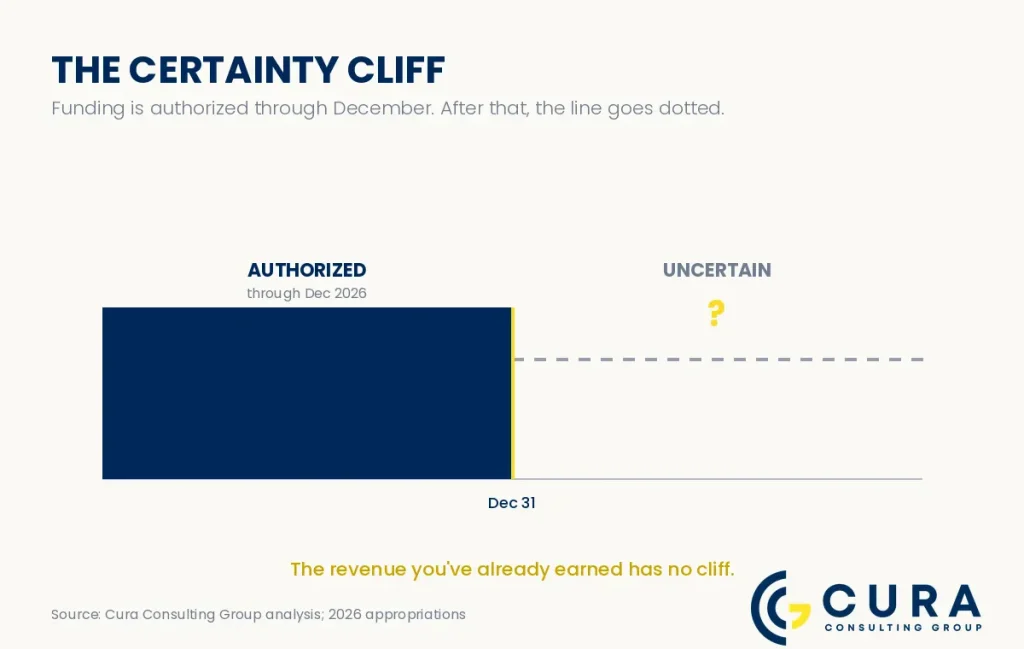
Here’s the landscape, stated plainly for people who already live it: funding is set at $4.6 billion but authorized only through December 2026. The reconciliation law carries an estimated $911 billion in Medicaid cuts, and Medicaid is ~43% of community health center operating revenue. Work requirements and coverage churn arrive by year-end. You know all of this.
What that analysis leaves out is the variable you actually control. Every one of those external pressures reduces the certainty of your incoming revenue — which makes the revenue you’ve already earned but aren’t capturing the most reliable capital you have. When the external ledger gets less predictable, the internal ledger stops being a back-office concern and becomes your primary source of financial stability.
Why this is operational, not just political
The projected coverage losses won’t come mostly from people who are truly ineligible — a large share will come from administrative churn: eligible patients falling off over paperwork and re-verification. For your operation, that translates directly into more eligibility-driven denials, more coverage gaps, more claims bouncing for reasons that began at the front desk. The policy change becomes a billing surge you have to absorb.
The exposure underneath it all
Nationally, community health centers ran negative net margins in 2024, half operate with fewer than 90 days of cash, and a quarter run margins below −4%. Against that, chronic revenue-cycle underperformance isn’t an annoyance — it’s the exposure most likely to end the organization, and it’s the one entirely within your control.
Stop planning around the funding calendar you can’t change. Start closing the revenue gaps you can. In a year of shrinking external certainty, full capture isn’t optimization — it’s the difference between planning from strength and planning from fear.
See where your center stands against these pressures.
See yours → lighthousehealthai.com/early-warning-check
Figures reflect published 2026 industry benchmarks (NACHC, KFF, CMS, HRSA, and industry revenue-cycle sources) and Cura Consulting Group analysis. Illustrative; individual center results vary. Not financial or legal advice.