

Every rural health leader in America is now, directly or indirectly, part of the largest rural health investment in a generation. The Rural Health Transformation Program is moving $50 billion through the states over five years, and the first-year money comes with a date attached: initial funds must be spent, documented, and defensible on a deadline that is now weeks away, not quarters.
Here is the uncomfortable truth about transformation funding, and it applies to every award in every state: the announcement is the easy part. Programs like this one are ultimately judged not by what was purchased but by what still operates when the funding ends. The telehealth platform matters less than the workflow that keeps it used. The new service line matters less than the reimbursement model that sustains it. The dashboard matters less than the leadership habit of looking at it.
In our conversations with rural leaders this summer, three patterns keep surfacing.
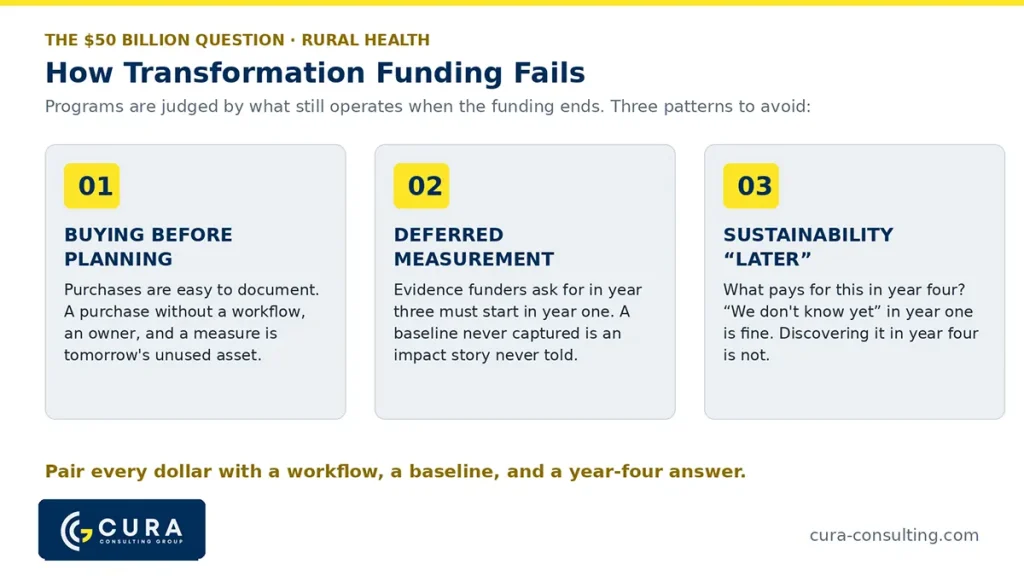
First, spend pressure is producing purchase decisions before operating decisions. When a deadline looms, the natural move is to buy something — equipment, licenses, a vendor contract — because purchases are easy to document. But a purchase without an operating plan is tomorrow’s unused asset, and reviewers are increasingly sophisticated about the difference. The organizations that will look strongest at reporting time are the ones that can pair every dollar with a workflow, an owner, and a measure.
Second, measurement is being deferred, and deferred measurement is lost measurement. The evidence a funder asks for in year three has to start being collected in year one. Baseline access data, utilization before and after, avoided transfers, staffing effects — if the baseline was never captured, the impact story can never be told, no matter how real the impact was.
Third, sustainability is treated as a later chapter. It is actually the first question. Before any transformation dollar is spent, the discipline is to ask: what pays for this in year four? Sometimes the answer is reimbursement. Sometimes it is a partnership, a shared service, or a hard decision not to build. An honest “we don’t know yet” in year one is fine. Discovering it in year four is not.
None of this requires heroics. It requires an operating layer under the funding: a clear map of every commitment and deadline, baseline measurement from day one, and a sustainability answer — even a draft one — attached to every major spend. Organizations that build that layer now will spend the next four years compounding. Organizations that don’t will spend them reconstructing.
The $50 billion question isn’t what rural health will buy with this money. It’s what rural communities will still have when it’s gone. That answer is being written right now, in implementation decisions that feel small and administrative and are neither.
Cura works with rural hospitals, networks, and their state partners on exactly this layer — implementation, measurement, and the operating models that outlast awards. If your organization is navigating transformation funding, a readiness conversation costs thirty minutes and is useful either way.