

Everyone is analyzing the Medicaid changes as a coverage story. For your revenue cycle, that framing is a trap — because it hides where the damage actually lands.
Cura Consulting Group Analysis · 2026
The policy facts are known: work requirements take effect by end of 2026, some enrollees move to six-month redetermination, and millions are projected to lose coverage. The instinct is to treat this as an access and mission issue — which it is. But if you stop there, you’ll miss that it’s about to become one of the largest operational stresses your billing team has faced.
Here’s the mechanism most analyses skip. A large share of the coverage loss won’t be genuine ineligibility — it’ll be administrative: eligible patients failing to complete paperwork, missing a redetermination, falling out of the system and back in. That means constant, churning eligibility status. And churning eligibility is a denial engine: coverage that lapsed between the visit and the claim, eligibility that wasn’t re-verified, patients seen under a plan that terminated.
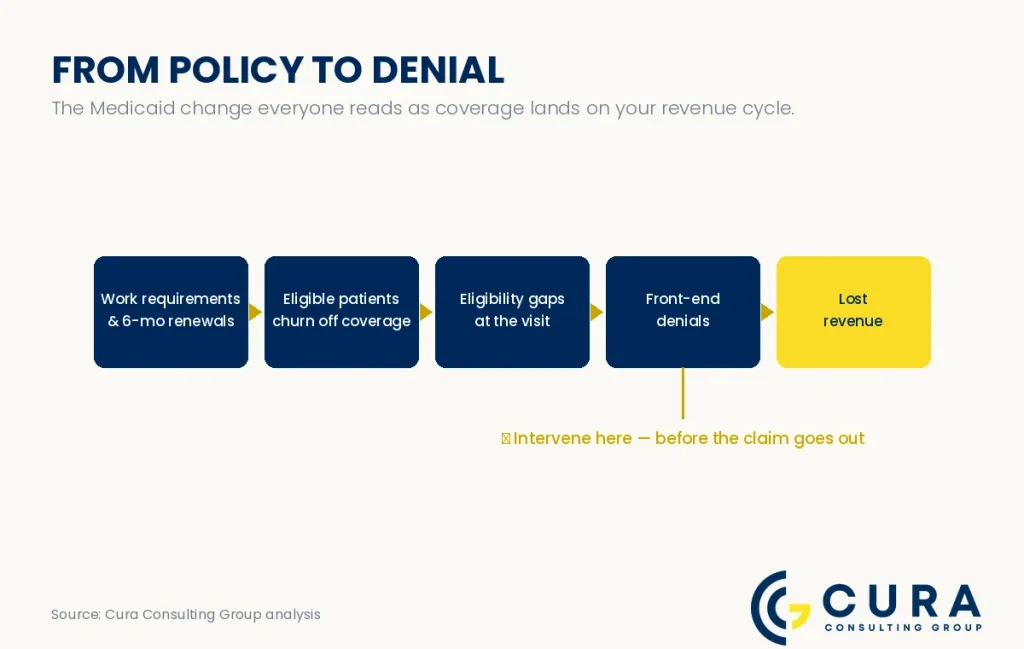
Every one of those is a denial that starts at the front desk and surfaces weeks later at the remittance.
The centers that protect their revenue through this won’t be the ones with the best appeals process. They’ll be the ones catching eligibility and coverage issues before the claim goes out.
Reactive denial management is a permanent, recurring cost. Front-end prevention is a one-time fix. The question isn’t “how fast can we work the wave of denials that’s coming” — it’s “how many of them can we prevent from ever being created.” That’s a different posture, and it’s the one that survives the next two years.
See your front-end exposure before the churn hits.
See your exposure → lighthousehealthai.com/early-warning-check
Figures reflect published 2026 industry benchmarks (NACHC, KFF, CMS, HRSA, and industry revenue-cycle sources) and Cura Consulting Group analysis. Illustrative; individual center results vary. Not financial or legal advice.